Potted Hydrangea: Indoor Care After Buying
See photos in full size
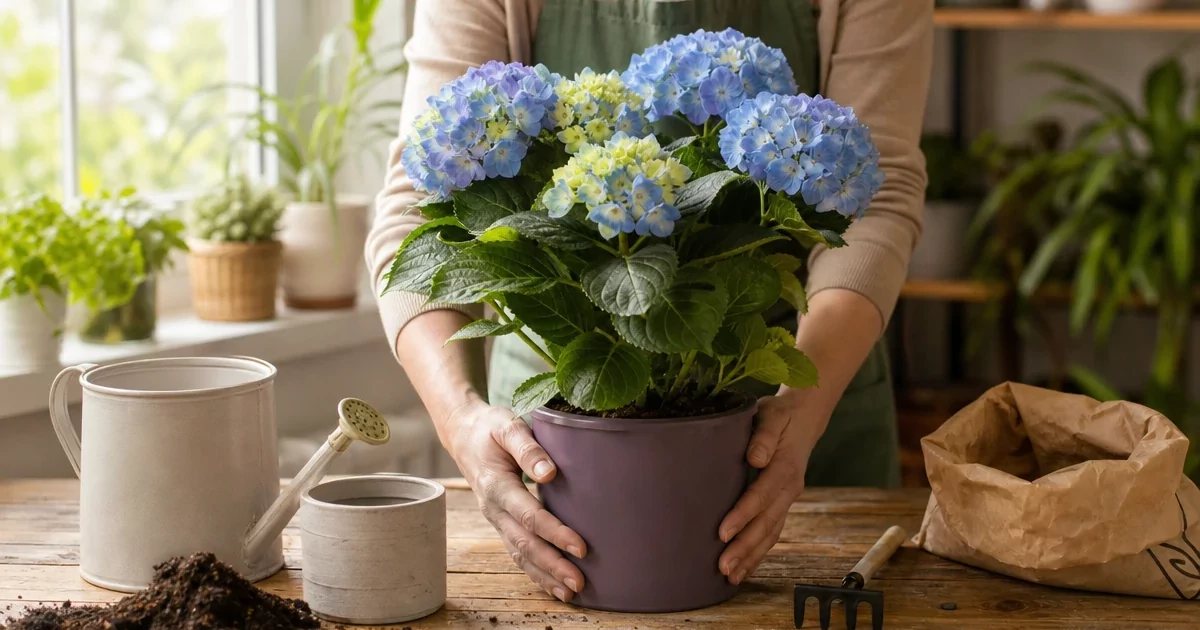
Potted hydrangeas are popular spring gifts for Women’s Day, Easter or Mother’s Day. They flower lavishly for weeks, but many people then do not know what to do next and the plant dies. In fact an indoor hydrangea can bloom every year with the right light, watering and an essential winter rest. Here is how to care for a potted hydrangea after buying it, how to repot, prune and prepare it to flower again. A new potted plant is easy to grow from a cutting, as explained in hydrangea propagation.
More on this topic: our hydrangea guide, bigleaf hydrangea, how to change hydrangea colour.
Choosing a potted hydrangea
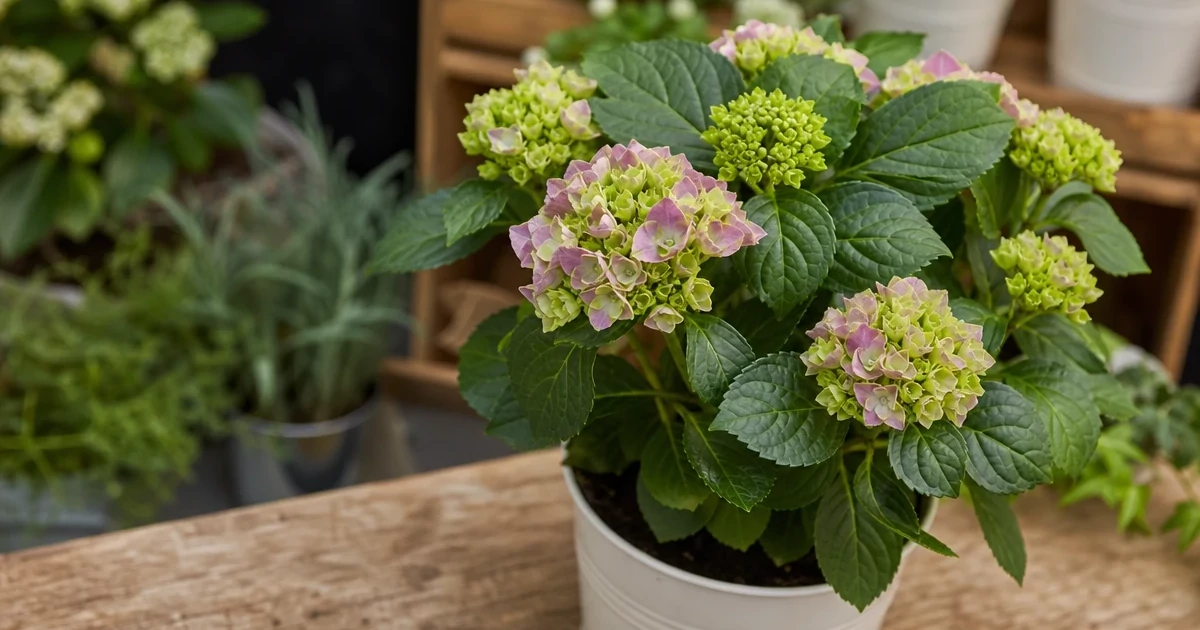
- Pick a plant with some heads not yet fully open; it will flower for longer.
- Leaves should be dark green and firm, with no spots or dry edges, and stems should not be drooping.
- The compost should be moist but not waterlogged, with no smell of rot from the drainage holes.
- Decide where it will live: bigleaf hydrangea suits indoors, while panicle or smooth hydrangea suits a terrace or balcony all year round.
Which hydrangeas grow well in pots
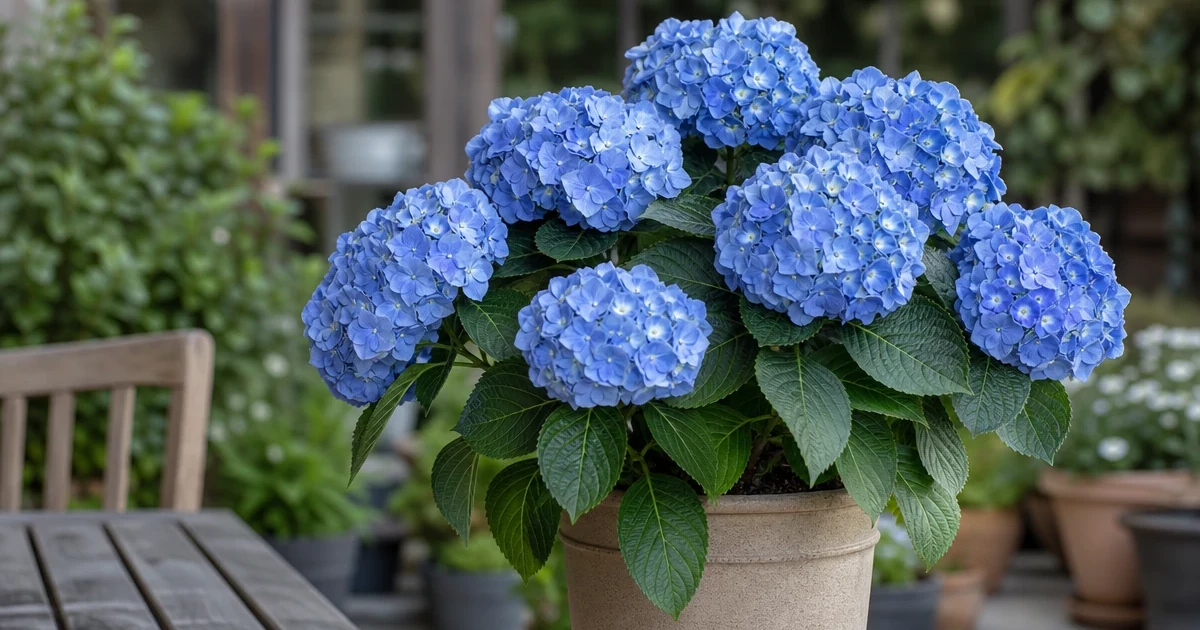
- Bigleaf hydrangea (Hydrangea macrophylla) is the one sold by florists and given as a gift, with round pink, blue or white heads. Reblooming varieties such as the Endless Summer series also flower on new shoots.
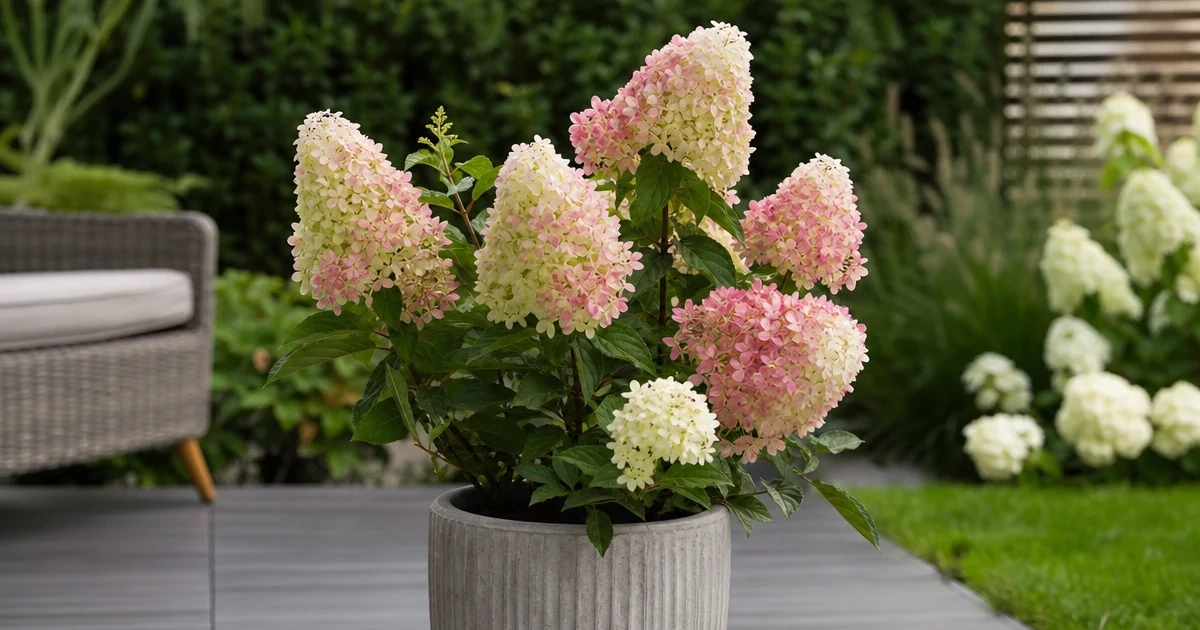
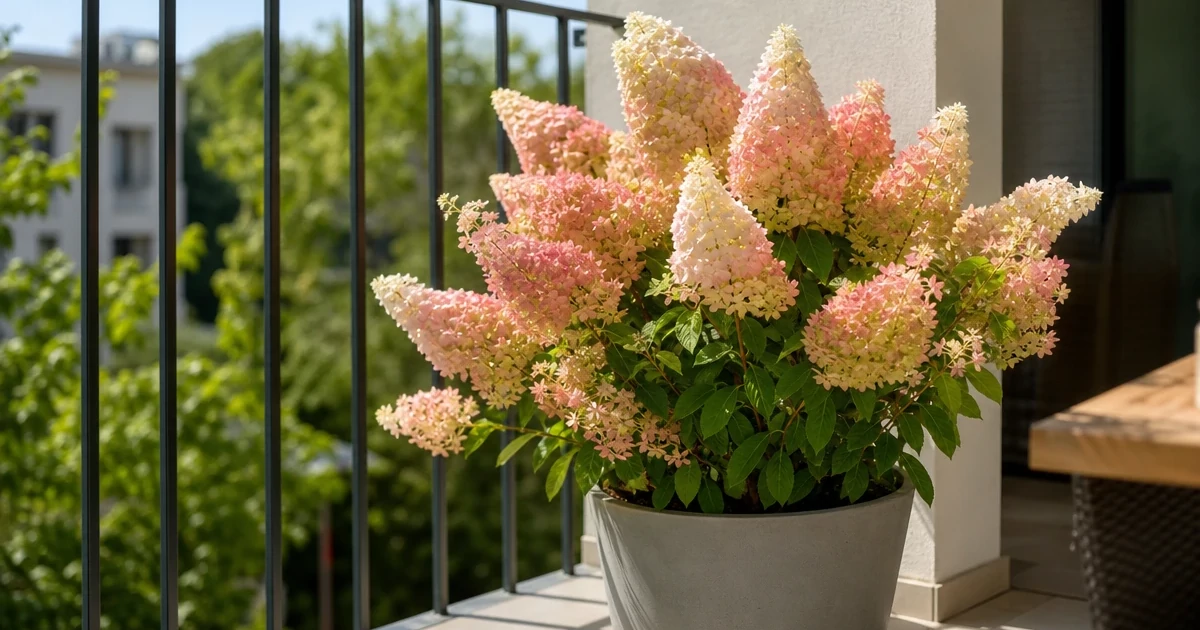
- Panicle hydrangea (H. paniculata) is hardy with cone-shaped heads; compact varieties up to 1 m, such as 'Bobo' or 'Little Lime', suit containers.
- Smooth hydrangea (H. arborescens) is tough, with large white or pink globes, and overwinters well in a big container.
Bigleaf is the usual choice indoors, while panicle and smooth hydrangeas are more reliable on a terrace or balcony where the plant will spend the winter outside.
Care after buying
- Potted hydrangeas are bigleaf hydrangeas. Put yours in a bright spot without direct midday sun — an east or west window — away from radiators. The ideal temperature while flowering is +18…+22 °C.
- Keep the compost constantly moist: water with soft, settled water 2–3 times a week or plunge the pot in water for 15–20 minutes and let it drain. Hydrangeas do not forgive drying out — the heads wilt within hours.
- If the pot is wrapped in decorative foil, remove it or make holes so water does not pool around the roots. More in bigleaf hydrangea.
Repotting and pruning
- After flowering, cut spent heads back to the first pair of strong buds. Repot into a pot 2–3 cm wider using acidic hydrangea or rhododendron compost with drainage at the bottom.
- Compost acidity decides the next flower colour — see how to change hydrangea colour. General repotting rules are in how to repot a houseplant.
- In summer put the pot on a balcony or in the garden in part shade: shoots ripen better outdoors and set more flower buds.
Winter rest: the key secret
- To flower again, a hydrangea needs 2–3 months of cool rest. In October, as leaves yellow, move it to a dark or dim place at +4…+8 °C — a cellar, glazed balcony or cool hallway.
- During rest, water every 2–3 weeks just to stop the root ball drying out. Leaves will drop — that is normal.
- In February bring it back to warmth and light, resume watering and feed with hydrangea fertiliser every two weeks. Buds will appear in spring.
Potted hydrangeas outdoors and on balconies
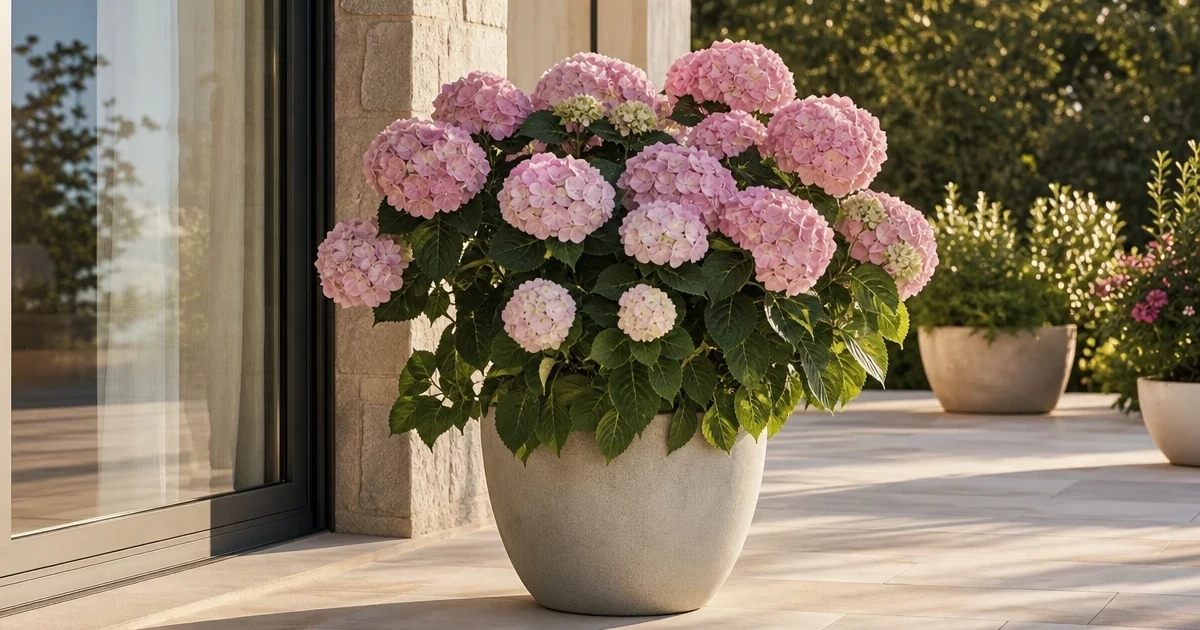
Hydrangeas thrive in large containers on a terrace or balcony if you follow a few rules:
- Container: 20–30 L or more for a mature shrub, with drainage holes; a small pot dries out within a day in hot weather.
- Position: morning sun and afternoon shade; panicle hydrangea tolerates more sun.
- Watering: daily in summer, sometimes twice a day in a heatwave; a bark mulch keeps moisture in.
- Feeding: hydrangea fertiliser every 2 weeks until August, then stop so the shoots ripen before winter.
Overwintering an outdoor potted hydrangea
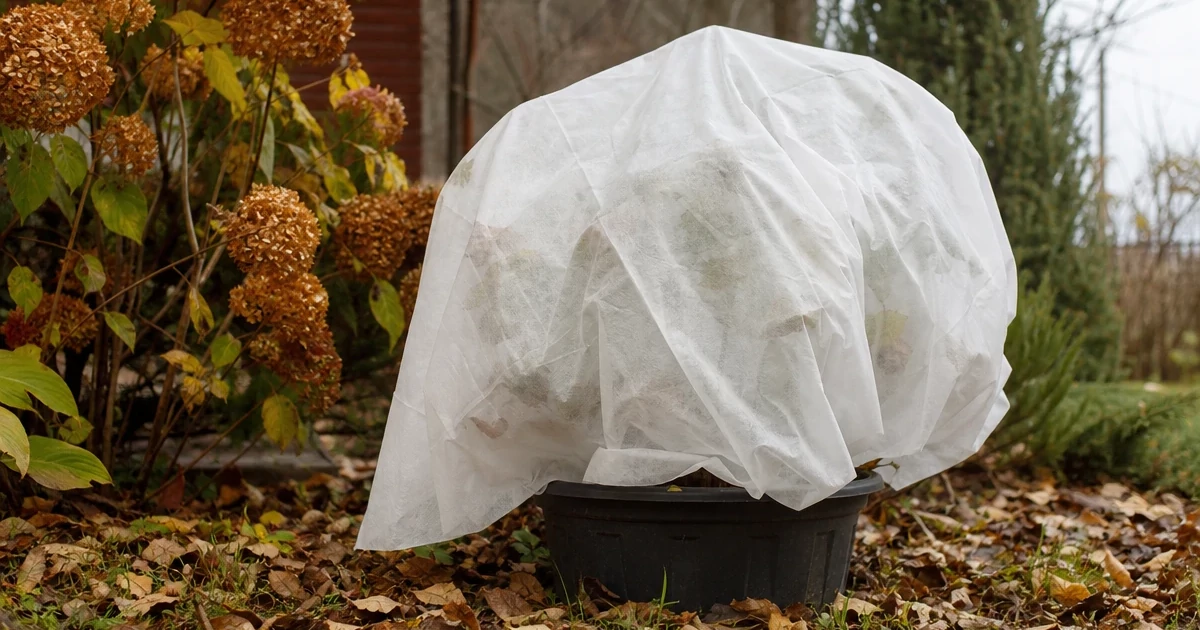
Roots freeze faster in a pot than in the ground, so even hardy hydrangeas need protection. Three reliable options:
- A cold room (cellar, garage) at 0…+8 °C: the most reliable, especially for bigleaf types.
- A glazed or insulated balcony: stand the pot on polystyrene and wrap it in fleece or hessian.
- Sink the pot into the ground in the garden and mulch thickly with bark or leaves: for panicle and smooth hydrangeas.
In every case, do not let the compost dry out completely: give a little water during a thaw every 2–3 weeks.
Can a potted hydrangea be planted in the garden?
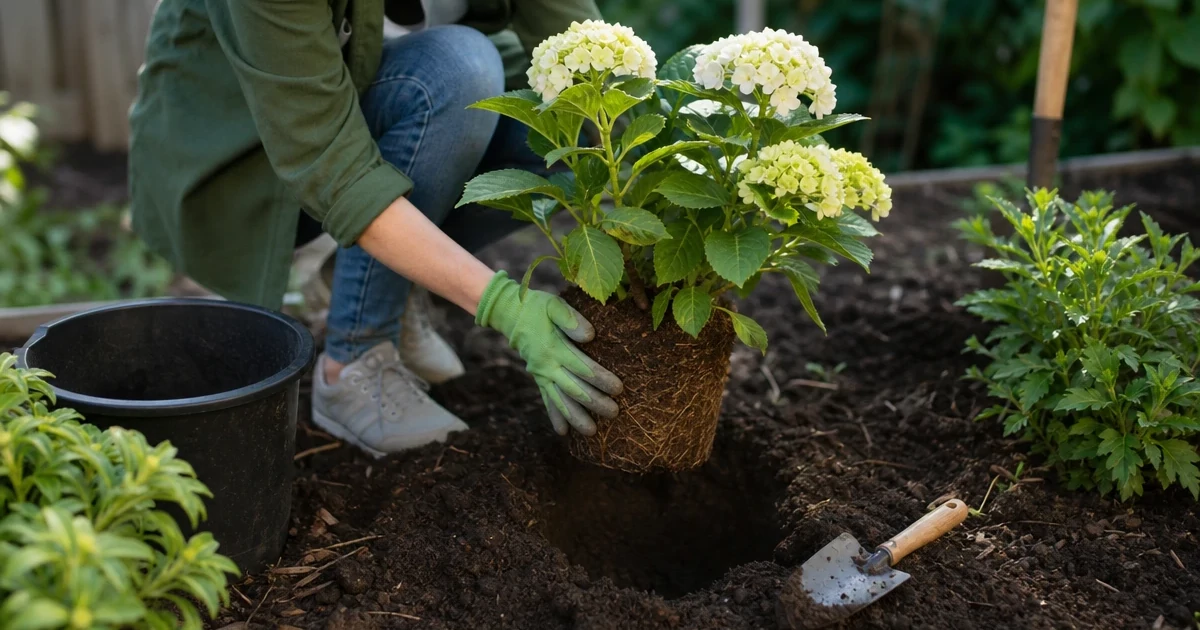
Yes. The best times are spring, after the last frosts, or early autumn so it can root before the cold. Harden off a greenhouse-grown hydrangea outdoors for 1–2 weeks first. Plant it in partial shade, in fresh acidic soil, at the same depth as in the pot. Protect a bigleaf hydrangea for its first winters: it flowers on last year's shoots, whose buds are easily frosted.
Potted hydrangea care calendar
| Period | What to do |
|---|---|
| February — March | Back into warmth and light, resume watering, first feed |
| April — June | Buds and flowers: generous watering, hydrangea feed every 2 weeks |
| July — August | Deadhead, repot, move out to the balcony |
| September — October | No feeding, water less, leaves turn yellow |
| November — January | Rest somewhere cool at +4…+8 °C, water every 2–3 weeks |
Common problems
- Heads wilting fast means drying out or heat: soak the pot and move it away from the radiator. Brown leaf edges mean dry air or hard water.
- Leaves paling between the veins is chlorosis from alkaline water: use soft water and acidify the compost. No flowers usually means it had no winter rest.
- After the spring frosts you can plant a potted hydrangea in the garden, but bigleaf varieties need winter cover. More on all hydrangeas in our hydrangea guide.
Hydrangeas with delivery
Want to delight someone with hydrangeas? We deliver single stems or bouquets across Kyiv and Ukraine, with a card carrying your words.

See photos in full size
See hydrangea bouquets and potted plants.

See photos in full size
FAQ
How do I care for a potted hydrangea after buying it?
Bright spot without direct sun, +18…+22 °C, constantly moist compost and soft water.
Can a hydrangea live indoors all year?
Yes, but it needs 2–3 months of winter rest at +4…+8 °C or it will not flower.
Why is my indoor hydrangea wilting?
Usually because the root ball dried out or it is too hot near a radiator.
Can I plant an indoor hydrangea in the garden?
Yes, after spring frosts, but bigleaf varieties need winter cover.
How long does a potted hydrangea flower?
Indoors at +18…+20 °C with regular watering, about 4–6 weeks. In heat or near a radiator the heads fade faster.
Can a hydrangea live indoors permanently?
Yes, if it has a bright spot and a cool winter rest every year. Without the rest it survives but usually does not flower. It benefits from summers on a balcony.

See photos in full size
Author: Maria Svitlovir
Graduated from Taras Shevchenko National University of Kyiv, Institute of Biology and Medicine (2001). BSc in Biology, MSc in Horticulture. Writes about plants, works at a garden centre selecting and repotting plants, and contributes to plant reference guides.
-
 Crystal Anniversary WishesRead full2026-02-08
-
-

-
 Volodymyr Name Day WishesRead full2026-06-17
-
 Happy Birthday, Maryna: WishesRead full2025-09-20
-
 Journalists Day WishesRead full2026-05-03