How to Care for Tulips in a Vase So They Last Longer
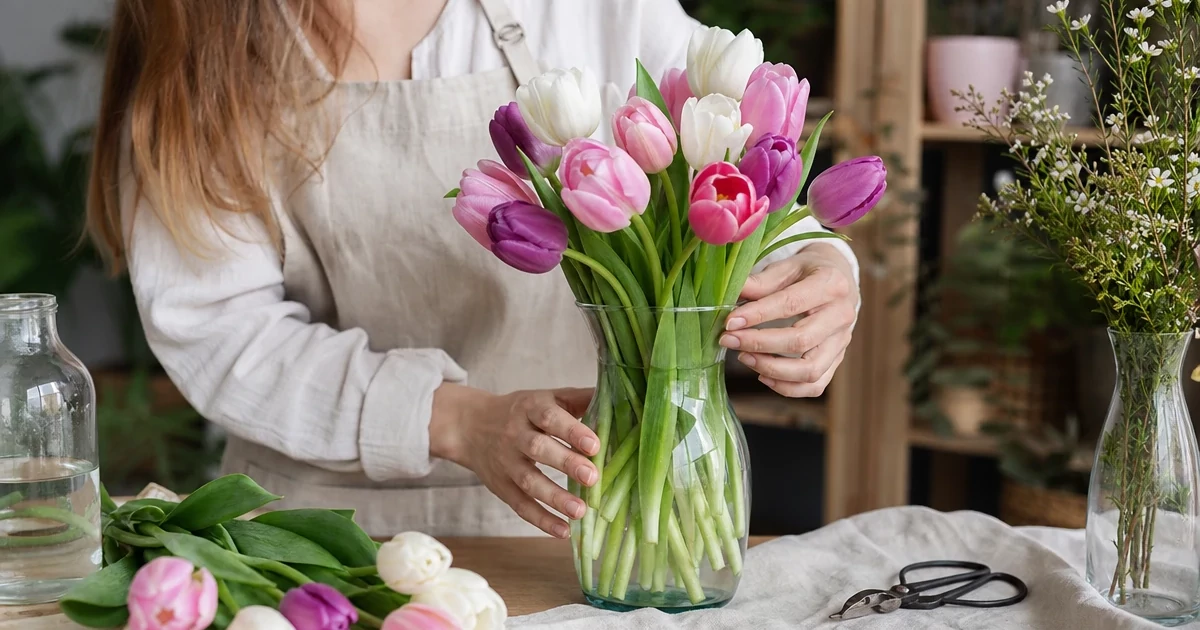
See photos in full size
Tulips are among the best-loved spring flowers, but in a vase they are unpredictable: they stretch, bend, open before your eyes and sometimes droop quickly. All of this is normal — and almost all of it can be managed. We have collected the proven rules in one place: what to do in the first hours, which vase and water to use, why tulips grow in the vase and turn towards the light, which folk tips work and which don't, and how to keep the bulbs of garden tulips. Real photos: tulip bouquets: real photos.
Fresh flowers for your home or as a gift: tulips and flowers in a box.
What to do right after buying

- Remove the wrapping and check the stems; strip any damaged leaves that would sit below the waterline.
- Recut the stems. Trim 1–2 cm with a sharp knife. The firm white base of the stem is best removed, as it takes up water poorly.
- Straighten the stems. If the tulips have drooped, wrap the bunch tightly in paper so the heads are level and stand it in cold water for 1–2 hours. The stems will rehydrate and straighten.
- Put them in a vase of clean, cool water and add flower food if a sachet came with the bouquet.
Which vase and which water

A tall vase that supports at least half the stem length suits tulips best, as they bend less. Use cool water, 10–15 cm deep. Tulips drink a lot, so check the level daily and top it up. Change the water completely every 1–2 days, trimming the stems by 0.5–1 cm and rinsing the vase at the same time.
Why tulips grow and bend in the vase

Tulips are among the few flowers that keep growing after cutting: over a few days the stem can lengthen by several centimetres. They also turn towards the light, so a bouquet near a window gradually leans that way. To keep them straighter, turn the vase once a day and don't cut the stems too short when arranging.
Opening depends on temperature: tulips open faster in warmth and close at night. To keep the buds closed longer, keep the bouquet cool.
Where to put tulips

- Coolness. 15–18 °C is ideal. Moving the bouquet to the coolest spot at night noticeably extends its life.
- No direct sun or radiators. Warmth speeds up opening and wilting.
- Away from fruit. Ripe apples and bananas release ethylene, which ages flowers.
- Separately from daffodils. Freshly cut daffodils release a slimy sap that shortens tulips' vase life. To combine them, first keep the daffodils in a separate vase for 6–12 hours and don't recut them.
Folk tips: what works and what doesn't

- Sugar in the water. A little sugar does feed the flowers but also speeds up bacterial growth. Commercial flower food works better because it contains both nutrients and an antiseptic.
- A copper coin or aspirin. There is no reliable evidence they help; a clean vase and regular water changes matter more.
- Pricking the stem under the head with a pin. Sometimes recommended to stop tulips stretching, but the effect is doubtful and damaging the stem may speed up wilting.
- Ice in the water. Cool water helps, but ice-cold water offers no special benefit.
For more about tulip varieties and meanings, see our tulip guide.
Tulips and daffodils in one vase
A spring bouquet of tulips and daffodils looks wonderful, but you cannot put it together straight away. Freshly cut daffodils release a slimy sap that blocks other stems, and tulips wilt within a day or two in that water. Stand the daffodils alone in water for 6–12 hours to let the sap run, rinse the stems and, without recutting them, add them to the tulips in fresh water. Recut the daffodils and the process starts all over again.
How long tulips last in a vase

With good care, 5–7 days; up to 10 days in a cool room with flower food. Tulips bought at the stage of a coloured but tightly closed bud last longest.
Garden tulips and their bulbs

If you cut tulips from your own garden, leave at least 1–2 leaves on the plant: the bulb needs them to build strength for next year. Once the leaves turn yellow (usually in late June), lift the bulbs, dry them in the shade and store them somewhere dry and airy at 20–25 °C, then replant in September–October at a depth of about three times the bulb's height. Tulips from a bouquet cannot be planted — cut flowers have no bulb.

Frequently asked questions
Why have my tulips drooped?
Usually the stems lack water: recut them, wrap the bouquet in paper and stand it in cold water for 1–2 hours.
Should I trim tulips every day?
Every 1–2 days when you change the water is enough — by 0.5–1 cm.
Can tulips go in the same vase as daffodils?
Only after the daffodils have stood alone for 6–12 hours and released their sap.
Why do tulips open by day and close at night?
Petal opening depends on temperature and light: buds open in warmth and light and close in cool and darkness.


See photos in full size
Author: Maria Svitlovir
Graduated from Taras Shevchenko National University of Kyiv, Institute of Biology and Medicine (2001). BSc in Biology, MSc in Horticulture. Writes about plants, works at a garden centre selecting and repotting plants, and contributes to plant reference guides.
-

-

-
 Honey Savior Day WishesRead full2026-07-17
-
 Air Force Day WishesRead full2026-03-04
-

-