Jujube (Chinese Date): Health Benefits, Risks and Uses
Common jujube (Ziziphus jujuba), also called unabi, is a small tree or shrub known as the “Chinese date”. It has been grown in China for over 4,000 years, and in Ukraine it fruits well in the south. The fruit tastes like something between an apple and a date.
See photos in full size

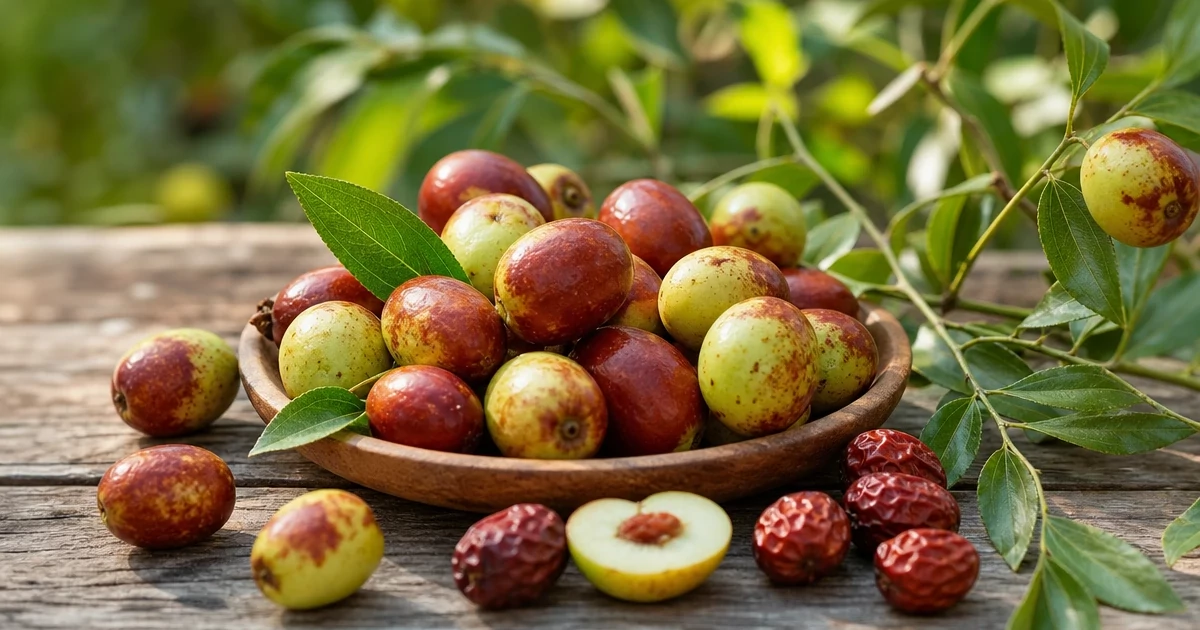
Illustration 1. Jujubes ripen in September–October, turning from green to reddish-brown.
What the fruit contains
Fresh jujubes are a source of vitamin C: according to USDA data, about 69 mg per 100 g, more than most citrus fruits. They also contain:
- dietary fibre, which supports healthy digestion;
- potassium and magnesium;
- antioxidants: flavonoids and polyphenols;
- natural sugars, far more concentrated in dried fruit than in fresh.

Illustration 2. Fresh fruit is crisp and juicy; dried fruit is sweet, like dates.
Health benefits
Traditional Chinese medicine uses jujube as a calming tonic. Modern studies are still small, so the benefits should be seen as likely rather than proven:
- Digestion. Fibre gently stimulates the gut, and in small studies the extract eased constipation.
- Sleep and calm. Seeds of related species are used for insomnia in traditional medicine.
- Immunity. Vitamin C and antioxidants support the body’s defences.
- Heart. Potassium helps maintain normal blood pressure.
Risks and contraindications
- Diabetes — dried fruit is very sweet and should be limited.
- Low blood pressure — large amounts may increase weakness.
- Medication — jujube may interact with sedatives and some antidepressants; talk to your doctor.
- Pregnancy and breastfeeding — the fruit is considered safe in normal food amounts, but avoid supplements and extracts without medical advice.
A typical serving is 5–10 fruits a day. Too much fibre can cause bloating.
How to eat jujube
- fresh, like apples; semi-ripe fruit with a blush is the tastiest;
- dried, instead of dates in porridge, baking and stewed fruit drinks;
- in tea: steep a few dried fruits in boiling water for 10–15 minutes;
- in jam, fruit leather and candied fruit.

Illustration 4. Tea with dried jujube is a traditional drink in China and Korea.

Illustration 5. Dried fruit keeps for up to a year in a dry, closed jar.
Growing it in the garden
Jujube is drought-tolerant and loves light. Named varieties survive frosts down to ?20…?25 °C, so it is grown in southern and central Ukraine. A sunny spot, light soil without standing water and minimal watering are all it needs. Grafted saplings start fruiting in their 2nd–3rd year.

Illustration 3. A mature jujube bush yields up to 20–30 kg of fruit a season.
In summary. Jujube is a tasty, healthy source of vitamin C and fibre. People with diabetes or low blood pressure, and those taking sedatives, should eat it with care.