Phacelia: What It Is, Benefits, When to Sow and Cut
See photos in full size
Phacelia is a fast-growing annual with lacy leaves and curled lavender-blue flower heads. Gardeners sow it as a green manure to improve soil and smother weeds, and beekeepers love it as one of the best nectar plants. Here is what phacelia looks like, when to sow it in spring, summer and autumn, how much seed you need and when to cut it.
Flowers from your garden or from us: flower baskets and potted plants.
What is phacelia
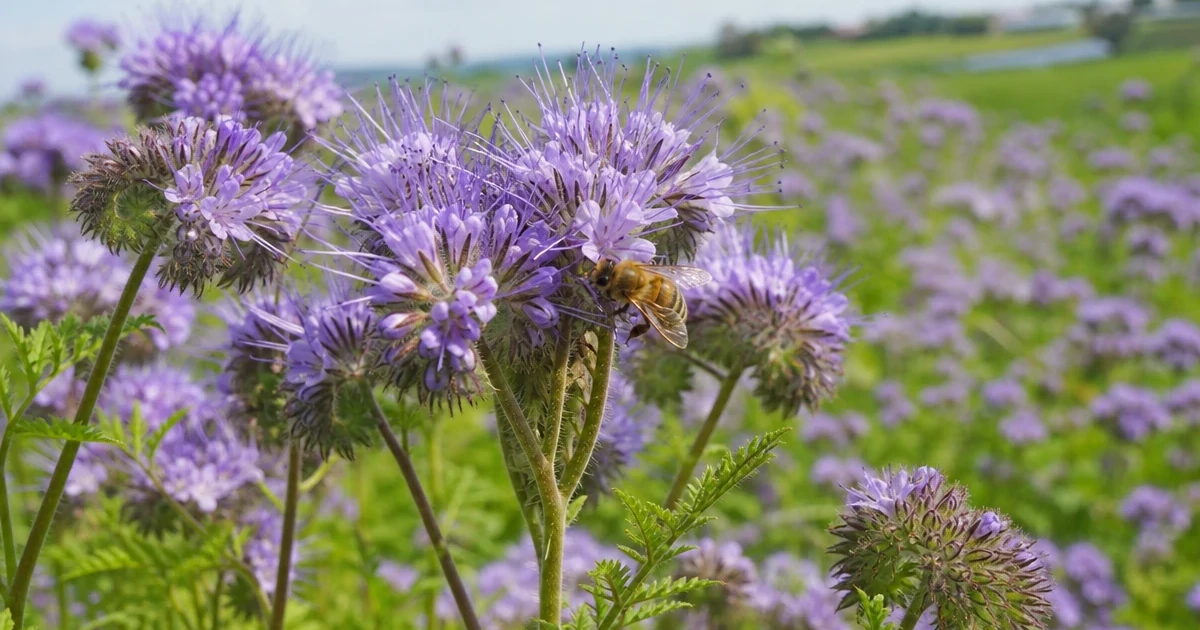
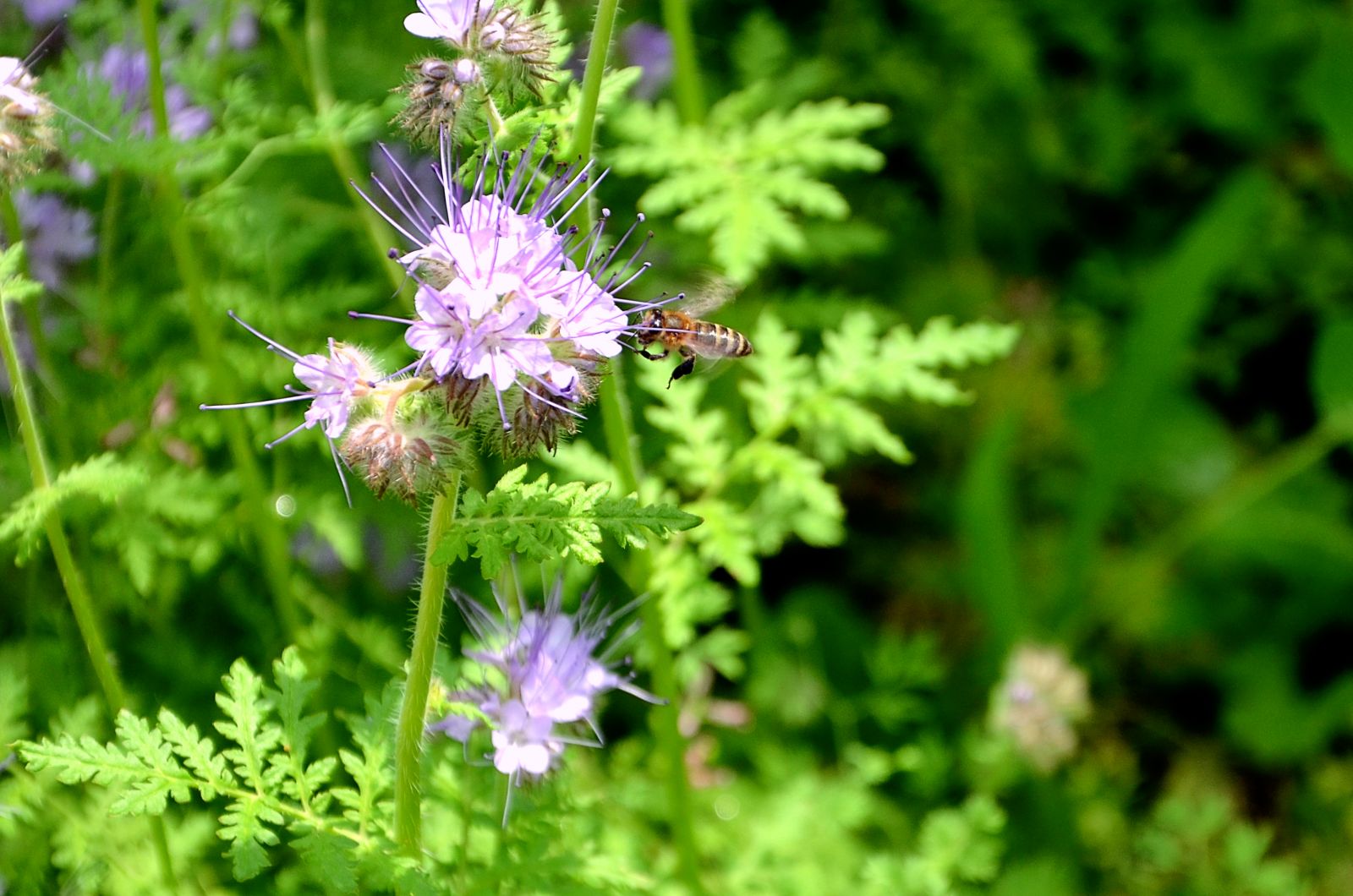
The species grown in gardens and fields is lacy phacelia (Phacelia tanacetifolia), native to the south-western United States and northern Mexico. It is an annual 50–80 cm tall (up to a metre on rich soil) with hairy stems, finely divided leaves and flower heads that slowly uncurl like a scorpion’s tail. It tolerates light frost, drought and poor soil, so it can be sown from early spring to late summer and even before winter.
What phacelia looks like
- Seedlings appear in 7–10 days: two rounded, hairy seed leaves followed by feathery true leaves.
- After 3–4 weeks it forms a dense green carpet 15–25 cm high with fern-like foliage.
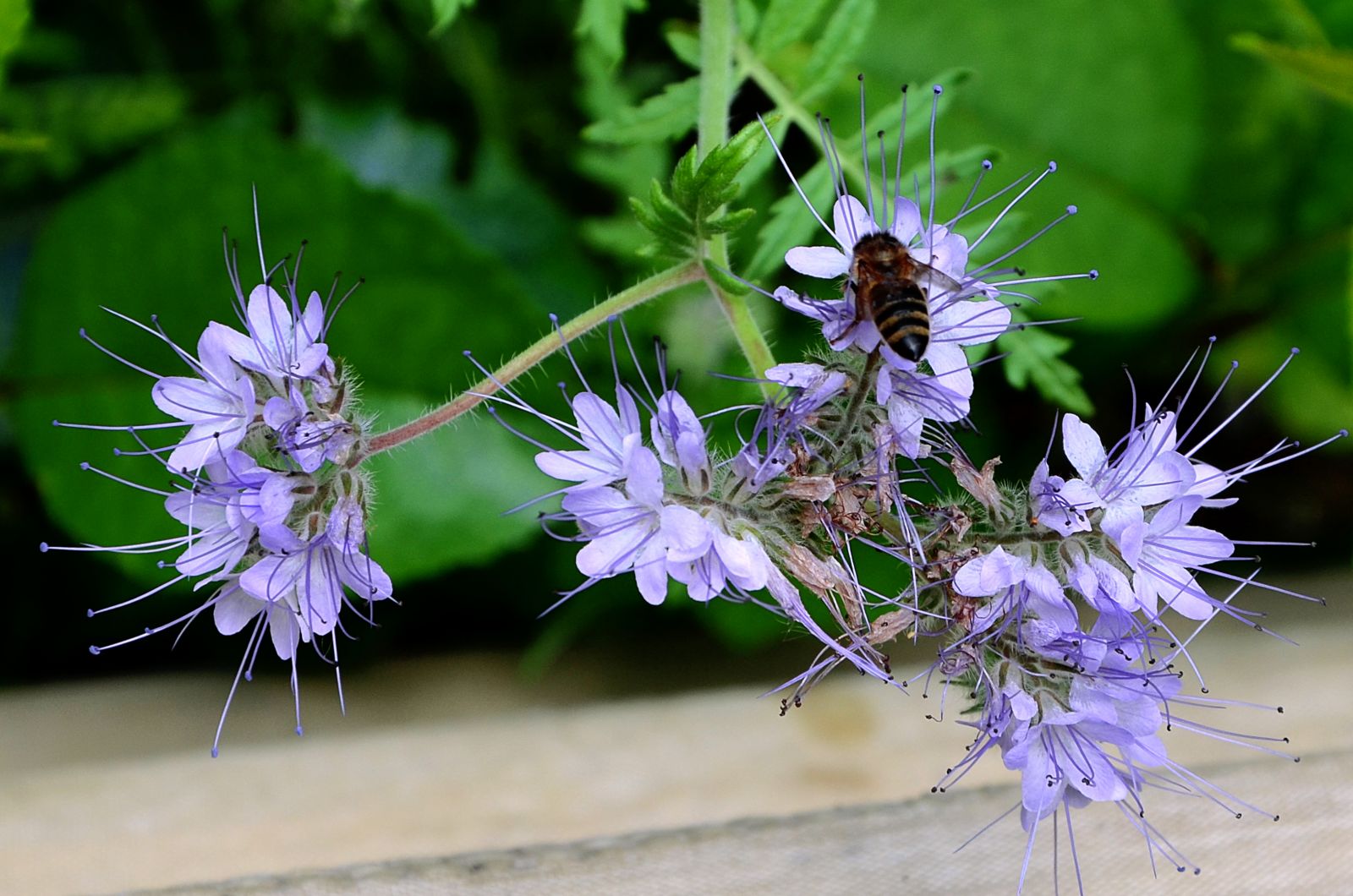
- After 5–7 weeks curled clusters of small bell-shaped lavender-blue flowers with long stamens appear.
- Flowering lasts 4–6 weeks, as the flowers open one after another from the base of each curl.
Types of phacelia
| Species | Height | Used for |
|---|---|---|
| Lacy phacelia (P. tanacetifolia) | 50–100 cm | Green manure, bee plant, fodder |
| Desert bluebells (P. campanularia) | 20–30 cm | Ornamental: vivid blue bell flowers for edging and borders |
Benefits of phacelia
- Soil. Fine fibrous roots loosen and structure the topsoil; the cut foliage becomes organic matter.
- Weeds. It covers the ground quickly and outcompetes most weeds.
- Bees and beneficial insects. Rich in nectar and pollen; it also attracts hoverflies, whose larvae eat aphids.
- Crop rotation. Phacelia is unrelated to common vegetables, so it does not carry over their pests or diseases.
Phacelia as a green manure
In 6–8 weeks phacelia produces a lot of leafy biomass. Cut it and leave it as mulch or dig it in shallowly. Unlike legumes such as vetch, clover or lupins, it does not fix nitrogen, so it is often sown in a mix with vetch or peas, with oats added for structure. It works before almost any crop — potatoes, tomatoes, cabbages, squash, strawberries or onions.
Autumn sowing after harvest is especially useful: sow in August or early September, let it grow until the frosts, and it will lie down as a protective winter mulch that is easy to fork in next spring.
When to sow phacelia
| Season | When | Purpose |
|---|---|---|
| Spring | As soon as the soil is workable, usually late March – April | Green manure before late crops, early bee forage |
| Summer | May – July, in several sowings 3–4 weeks apart | Continuous flowering for bees, cover for empty beds |
| Autumn | August – early September, after harvest | Green manure and winter mulch |
| Before winter | Late October – November, on cold soil | Early germination next spring |
Phacelia seed rate
- Garden: 1.5–2 g per m² (150–200 g per 100 m²); about 20–30% more for sowing before winter.
- Field green manure: roughly 10–15 kg per hectare; less if grown for bees.
- How to sow: mix the fine seed with dry sand, broadcast over loosened soil, rake in 1–2 cm deep and water.
When to cut phacelia
For soil improvement, cut at the start of flowering, while stems are still soft and before seed sets. For bees, let it flower and cut before it self-seeds. Vegetables can be planted 1–2 weeks after the foliage is dug in. Autumn sowings can simply be left for frost to flatten.
Phacelia for bees
Phacelia is often called the queen of bee plants: bees visit it from morning till evening, even in cool weather, and one sowing flowers for about a month. Depending on the source, a hectare can yield from a few hundred up to around 1,000 kg of light, mild honey. Beekeepers stagger sowings to fill gaps between other nectar flows.
Drawbacks
- Stiff hairs can irritate sensitive skin — wear gloves.
- Flowering plants attract many bees, so avoid sowing near play areas and doors.
- It does not add nitrogen on its own.
- Left to set seed, it will spread around the garden.
Discover another soil-improving plant in lupins, natural feeding in natural fertilisers, and how to start a flower bed in a flower garden for beginners.
FAQ
Is phacelia annual or perennial?
Annual. You can grow two or three sowings a season and sow again each year.
When should I sow phacelia as a green manure?
In spring once the soil is workable, in summer on empty beds, in August – early September after harvest, or in late autumn on cold soil for spring germination.
How much phacelia seed do I need?
1.5–2 g per square metre for a garden green manure, or about 10–15 kg per hectare in the field.
When do you cut phacelia?
At the start of flowering for green manure, or after flowering (before seed set) if you grow it for bees.
Is phacelia toxic?
No, but its bristly hairs can irritate sensitive skin.

Author: Maria Svitlovir
Graduated from Taras Shevchenko National University of Kyiv, Institute of Biology and Medicine (2001). BSc in Biology, MSc in Horticulture. Writes about plants, works at a garden centre selecting and repotting plants, and contributes to plant reference guides.
-

-
 Caring For the Potted Rose: TipsRead full2015-11-09
-

-

-
 Happy Birthday, Pavlo: WishesRead full2025-09-01
-
 Dmytro Name Day WishesRead full2026-06-10